Shifting From Artifacts to Orchestration: Why the Future of Design Thinking Demands a New Operating System


For years, design thinking lived at the front end of innovation. Workshops. Journey maps. Sticky notes arranged with optimism, and there was genuine value in that. It brought human-centred thinking into rooms that had long been dominated by spreadsheets and org charts.
But something fundamental is shifting.
Design is no longer a creative exercise at the beginning of a process. It is becoming the strategic through-line for how organizations create and deliver value, end-to-end, across technology, operations, ecosystems, and human experience.
The question is whether leaders are ready for what that actually means.
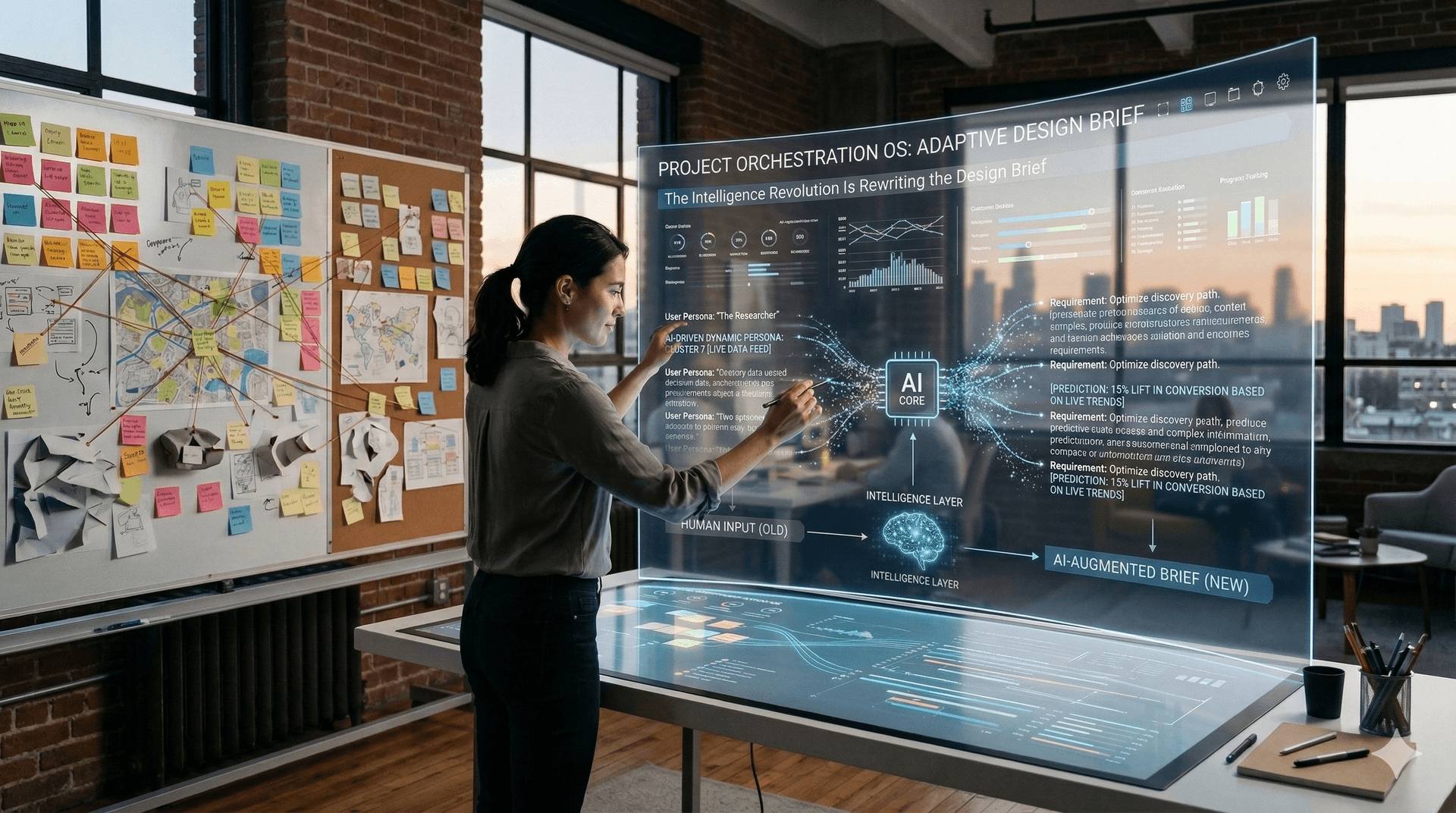
The Intelligence Revolution Is Rewriting the Design Brief
The infographic shared earlier this week clearly tells part of the story. AI is no longer an add-on feature layered onto existing experiences. It is becoming core infrastructure, changing how interactions are structured, how decisions are made, and how trust is established between organizations and the people they serve.
This creates a new design imperative.
When systems begin behaving autonomously, recommending, predicting, deciding, designers must build something more demanding than aesthetics or usability.
They must build clarity. Responsible AI and trust design require that automated behaviours be transparent enough for users to understand, and human enough to feel trustworthy. A seamless handoff between an AI copilot and a human agent is not a technical specification.
It is a relationship design challenge.
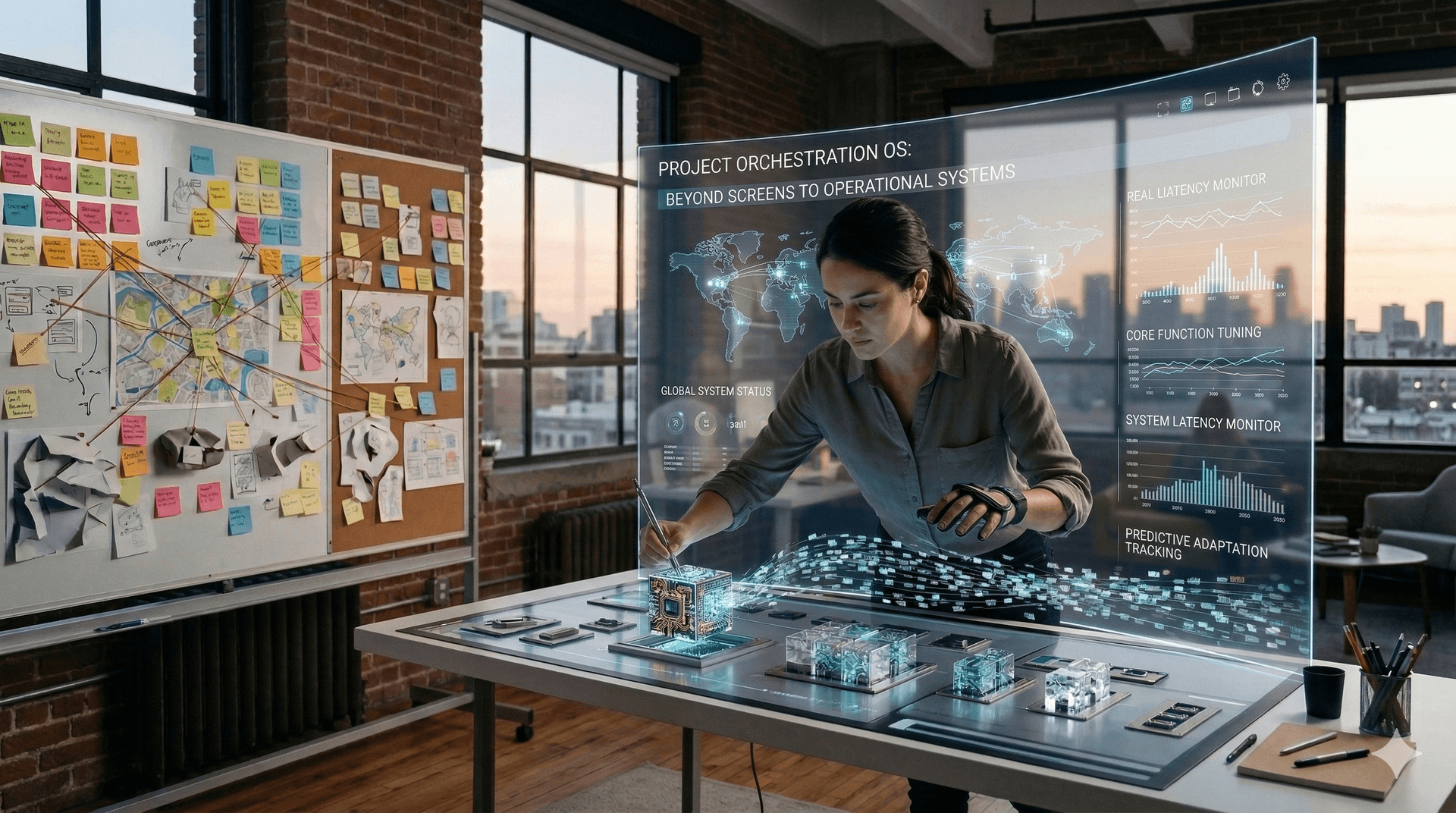
Beyond Screens to Operational Systems
Traditional design thinking focused on the front stage, what the customer sees, feels, and experiences directly. The future demands equal attention to the backstage. Service blueprints are evolving from simple journey maps into complex operational architectures that connect front-stage experience with the processes, technologies, and partners that make it possible.
Design is moving into the operational core of organizations. This is not a design team conversation. It is a leadership conversation.
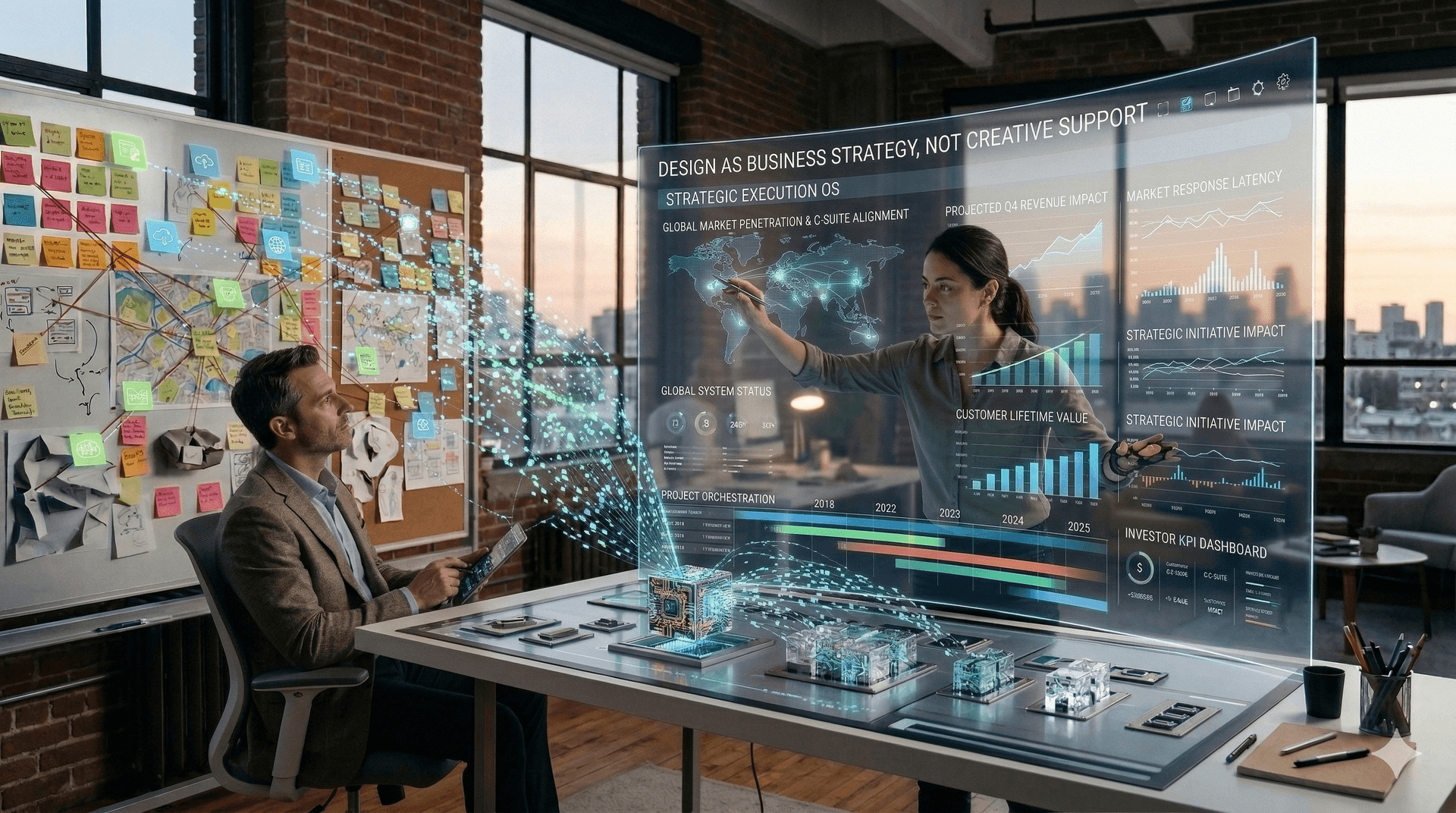
Design as Business Strategy, Not Creative Support
One of the major shifts through this evolution is the pairing of design thinking with OKRs and Jobs-to-be-Done frameworks. This matters because it changes design's relationship to accountability. When design is connected to measurable business outcomes, it stops being a creative input and becomes a strategic discipline. It earns its place at the table not through aesthetics alone, but through evidence of value created.
Organizations that have made this shift treat design not as a department, but as a lens through which strategy becomes tangible.
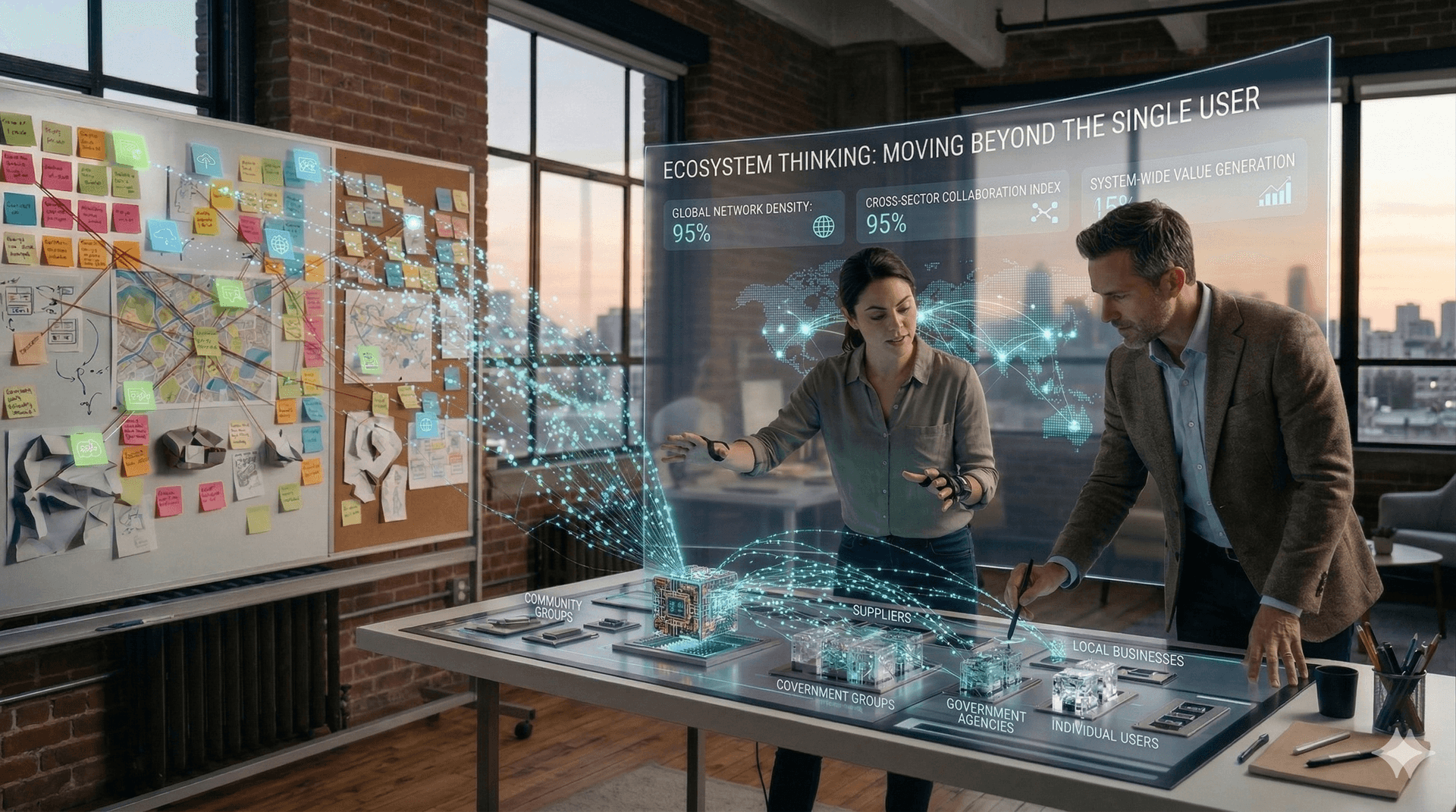
Ecosystem Thinking: Moving Beyond the Single User
Perhaps the most consequential evolution shown in the infographic is the shift from single-user optimization to multi-stakeholder ecosystem thinking. The traditional design challenge was understanding one person's journey. The modern challenge is orchestrating value across partners, communities, regulators, and environments simultaneously.
This is deeply aligned with how the CoCr8 Labs Operating System uses the Design Engine. Innovation does not occur in isolation. It emerges inside ecosystems where value is co-created, not delivered. The design challenge of the future is not solving for a user.
It enables an ecosystem to function coherently and with trust.
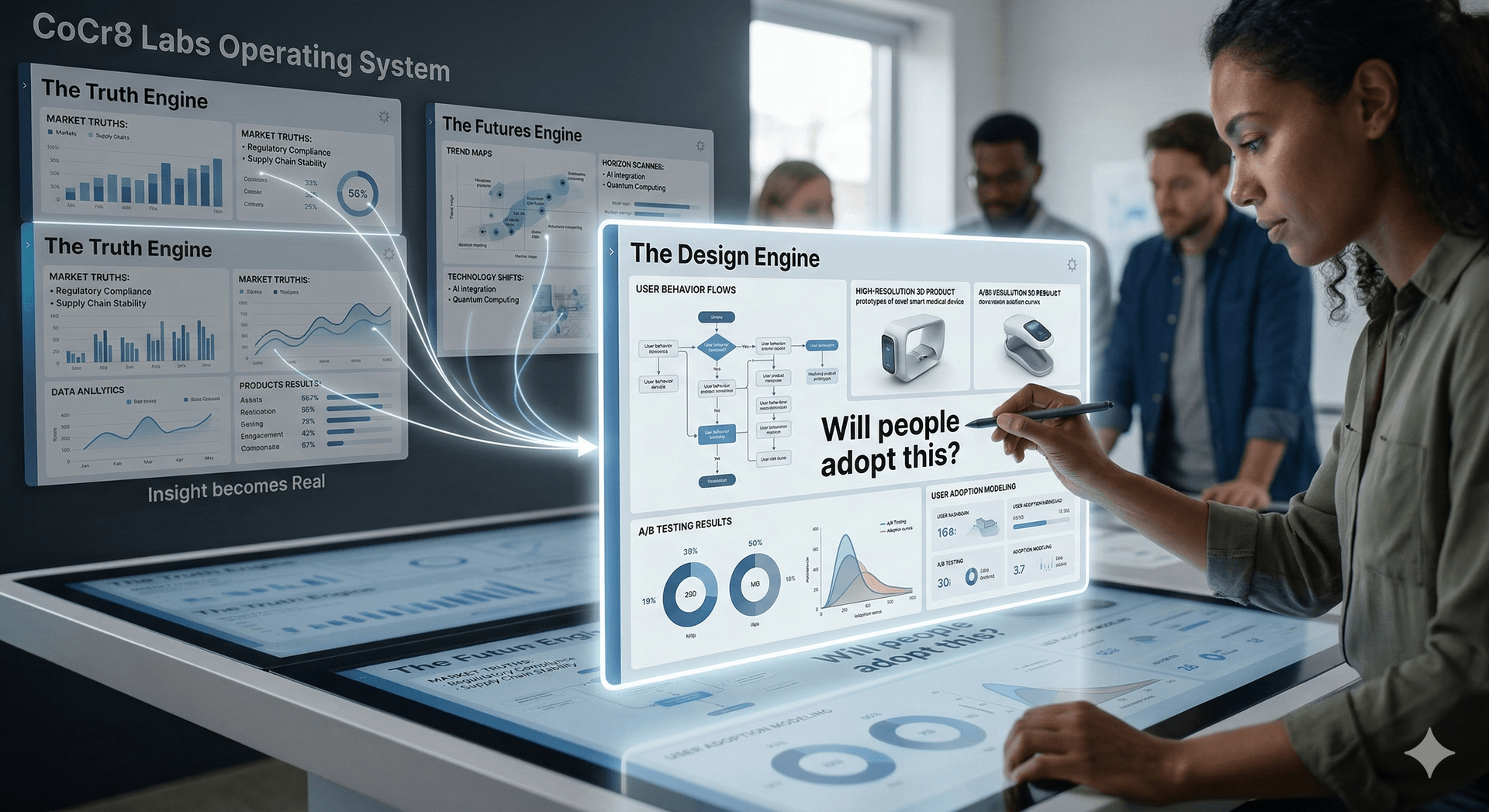
The Design Engine: Where Insight Becomes Real
Within the CoCr8 Labs Operating System, the Design Engine represents the third and final dimension, the place where truth and foresight become tangible.
The Truth Engine asks: What must be true?
The Futures Engine asks: What may change?
The Design Engine asks: Will people adopt this?
Innovation does not create value at the moment of invention. It creates value at the moment of adoption, and it is there that design does its deepest work.
The modern designer's toolkit, service blueprints, risk and compliance matrices, and adaptive AI playbooks reflect this evolution. These are not artifacts of creativity. They are instruments of integration, connecting ethical intent, operational reality, and human behaviour into integrated systems of value.
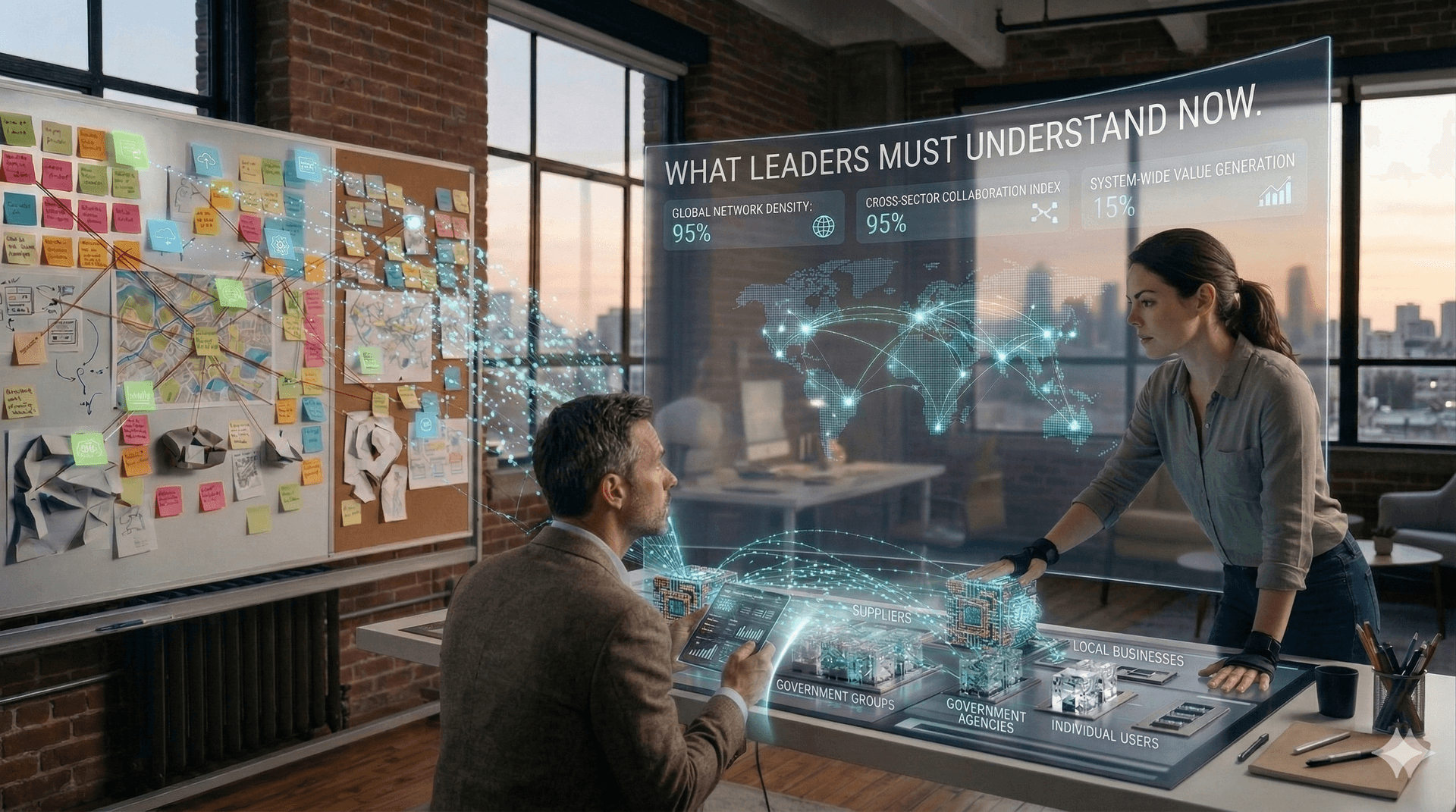
What Leaders Must Understand Now
The future of design thinking is not about better workshops. It is about better orchestration. It requires leaders who understand that design sits at the intersection of technology, operations, human behaviour, and ecosystem dynamics, and that these cannot be managed in isolation.
It requires recognizing that trust is now a design output, not an assumption, and it requires understanding that the organizations that master this shift will not simply create better products. They will create better systems, ones where value is built in, not bolted on.
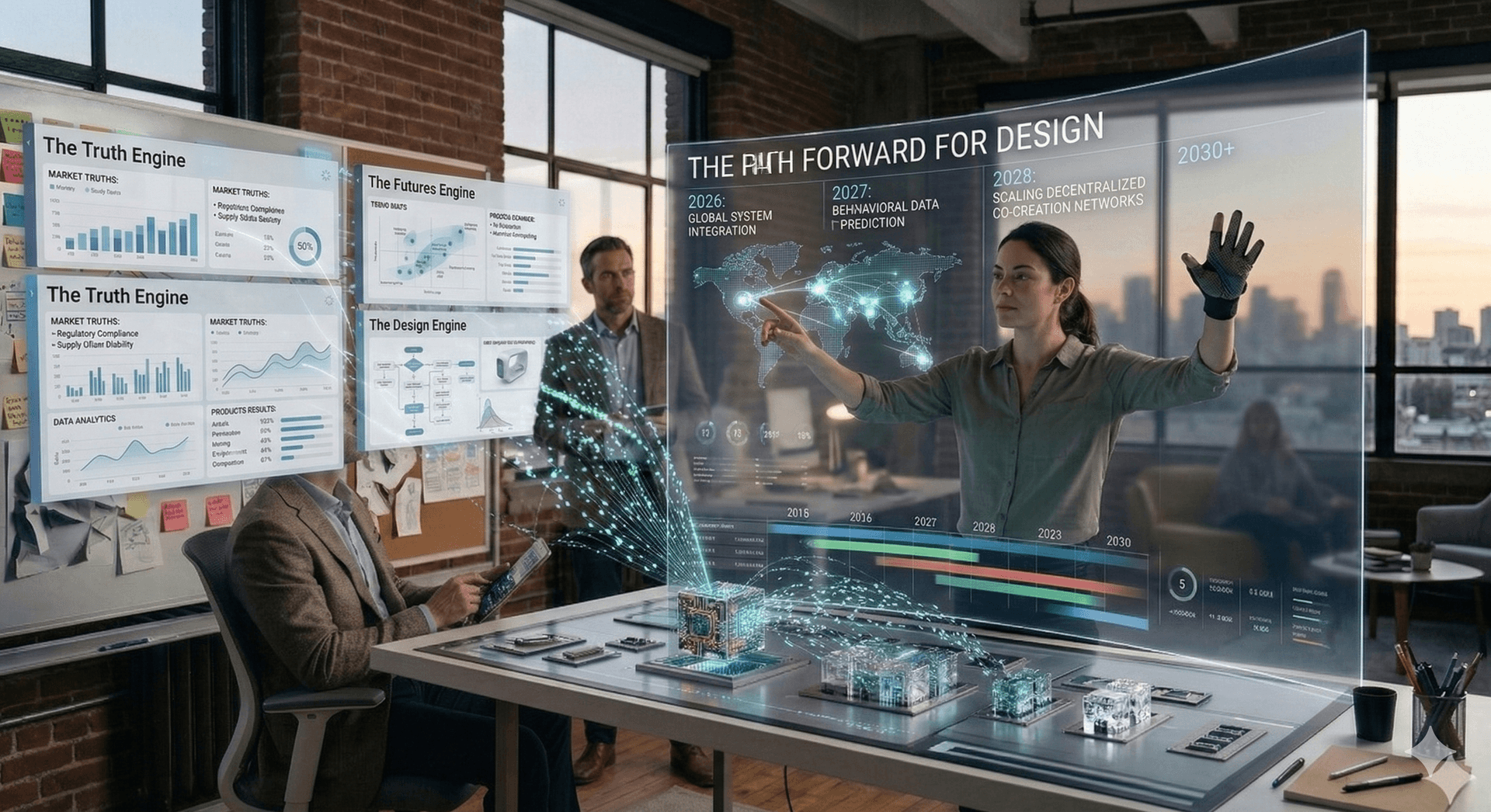
The Path Forward for Design
Design began as empathy made visible. Its future is empathy made operational, across AI systems, service encounters, stakeholder ecosystems, and adaptive infrastructures. The tools are evolving. The mandate is expanding.
But the basic truth remains:
- Value is only realized when people choose to adopt what you've created.
- Design is the bridge between insight and that choice.
Within a world of accelerating complexity, building that bridge well is not a creative competency.
It is a strategic imperative.
If this thinking resonates, the CoCr8 OS is the framework behind it — available as a live decision tool, a consulting engagement, or a free starting point.
Try the Decision Spark Canvas, explore the CoCr8 Innovation Hub, or start a conversation.