Experience as Strategy: Why Leading Companies Win with Design


Many organizations claim to be customer-focused, but there is a difference between listening to customers and designing entire systems around human needs.
The most innovative organizations today go beyond traditional product development. They adopt design thinking and service design to understand how people experience products, services, and organizations in the real world.
Companies such as Apple, Airbnb, Intuit, Nike, IKEA, and Starbucks have used these approaches to create breakthrough experiences and sustained growth. Their success reveals an important truth:
Innovation is not just about technology.
It is about designing better human experiences.
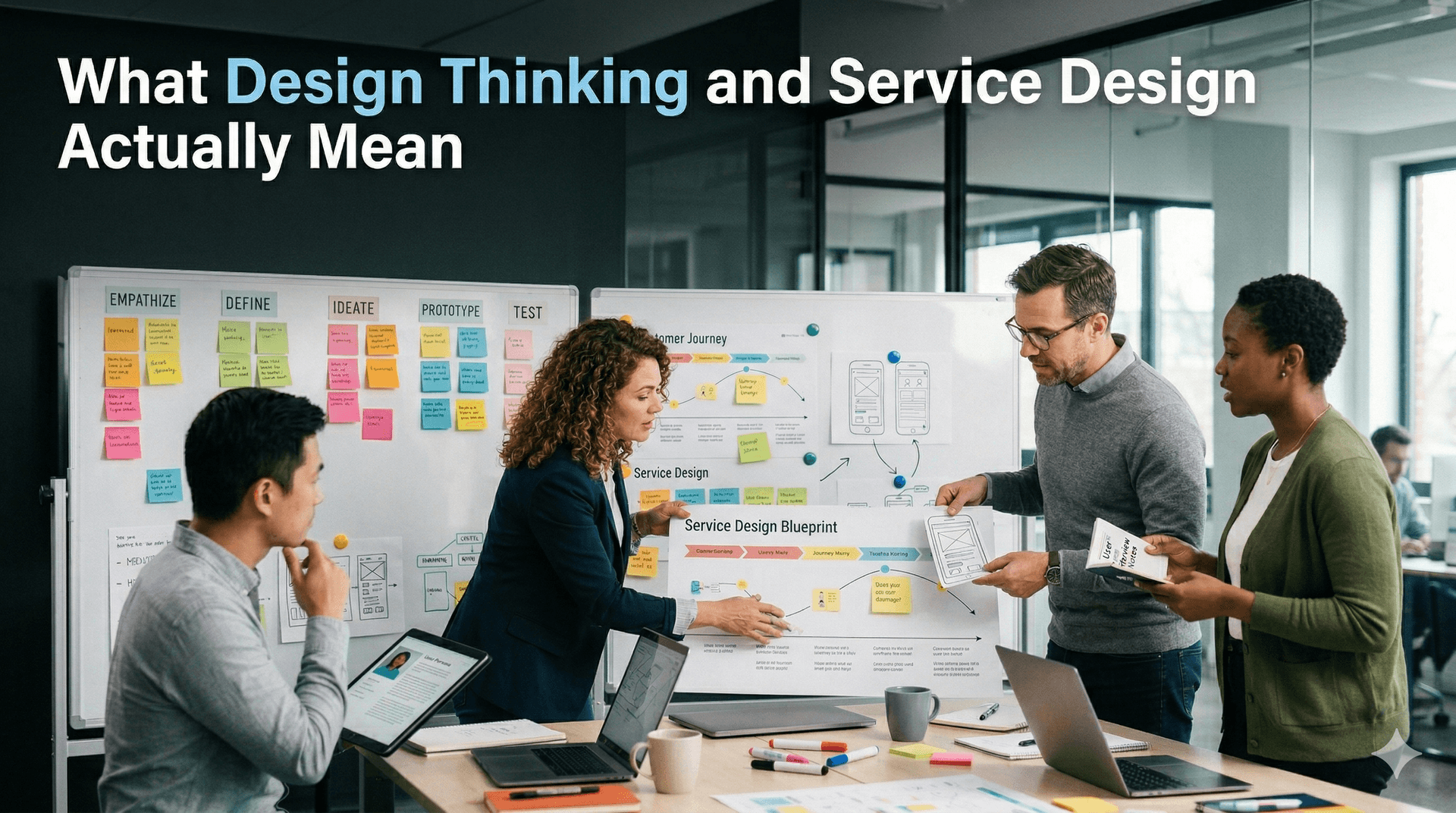
What Design Thinking and Service Design Actually Mean
Design thinking is a human-centred approach to innovation that begins with understanding people, their needs, frustrations, motivations, and behaviours.
Service design expands this approach further by examining the entire experience ecosystem, including:
- products
- digital platforms
- physical environments
- operational processes
- employee interactions
Together, these disciplines focus on answering one core question:
How can we design solutions that truly work for people?
Rather than starting with technology or internal assumptions, organizations begin with the human experience and work backward to build solutions.
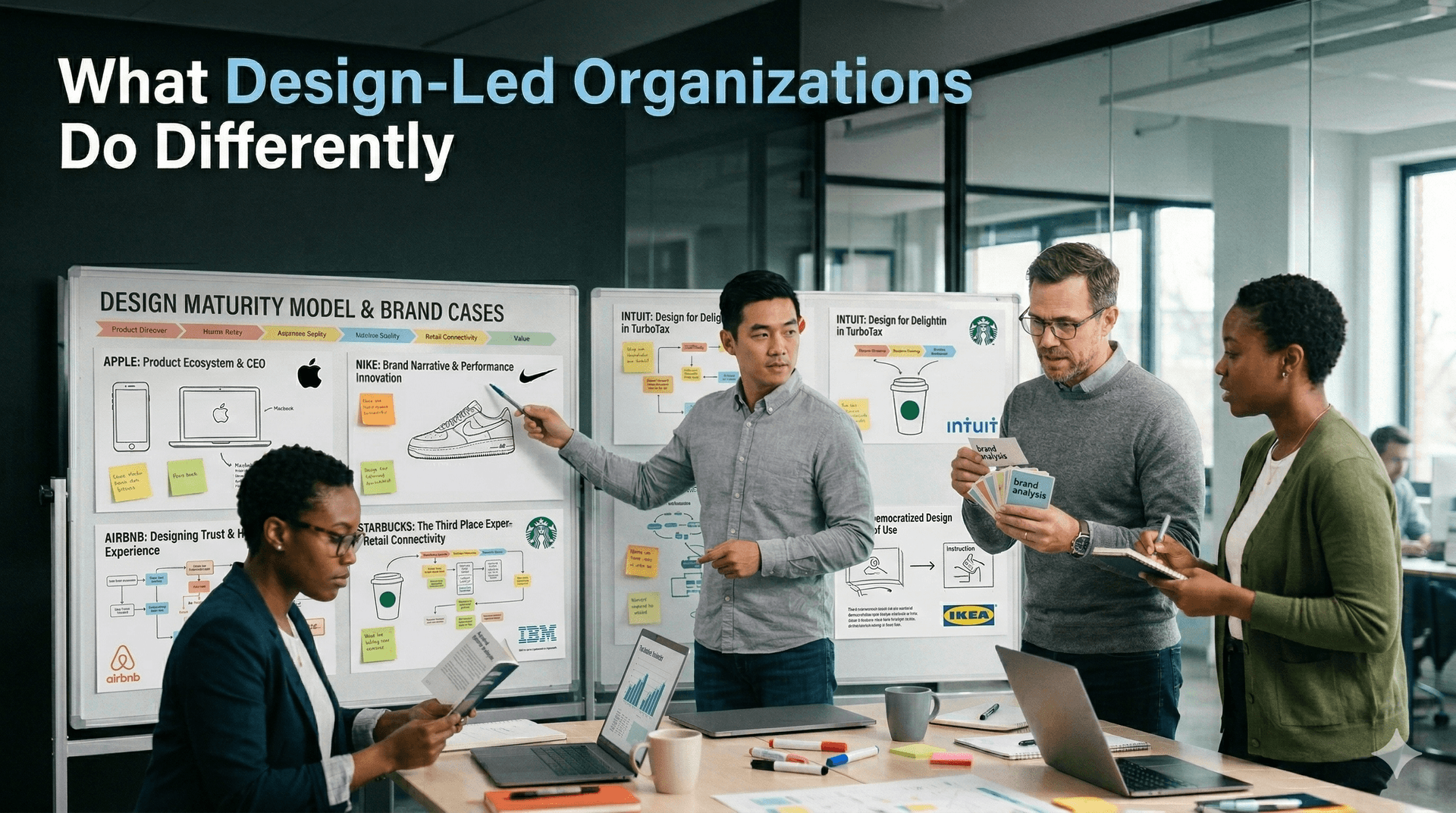
What Design-Led Organizations Do Differently
When we examine organizations that consistently apply design thinking and service design, several common practices emerge.
1. They Start With Deep Human Insight
Design-led organizations invest heavily in understanding their customers.
This often involves:
- ethnographic research
- observation of real-world behaviour
- customer journey mapping
- qualitative interviews
For example, Intuit’s “Design for Delight” framework emphasizes a deep understanding of customer frustrations before proposing solutions.
Similarly, Airbnb’s founders famously redesigned their platform after observing how hosts and guests actually interacted, identifying trust and experience as critical barriers.
This deep empathy allows companies to uncover needs that customers themselves may struggle to articulate.
2. They Map the Entire Customer Journey
Many organizations optimize individual touchpoints. Design-led organizations instead examine the entire journey. This includes every interaction someone has with the brand:
- awareness
- discovery
- purchase
- onboarding
- use
- support
- renewal
Starbucks, for example, has redesigned its stores, mobile ordering system, and employee workflows to create a seamless customer experience across digital and physical environments.
This holistic view ensures that innovation improves the entire system, not just isolated parts.
3. They Prototype and Test Ideas Quickly
Design thinking replaces lengthy planning cycles with rapid experimentation.
Instead of endlessly debating ideas, teams create prototypes and test them with real users. These prototypes may include:
- sketches
- digital mockups
- service simulations
- pilot programs
Companies like Nike and Apple rely heavily on prototyping labs and testing environments to refine products and experiences quickly. This iterative approach reduces risk while accelerating innovation.
4. They Bring Cross-Functional Teams Together
Design thinking works best when diverse expertise is involved. Design-led organizations bring together people from different disciplines, including:
- engineering
- marketing
- operations
- product development
- customer experience
This collaborative model ensures solutions are desirable, feasible, and viable.
For example, IBM scaled design thinking across its organization, integrating designers, engineers, and business leaders to accelerate product development and improve client experiences.
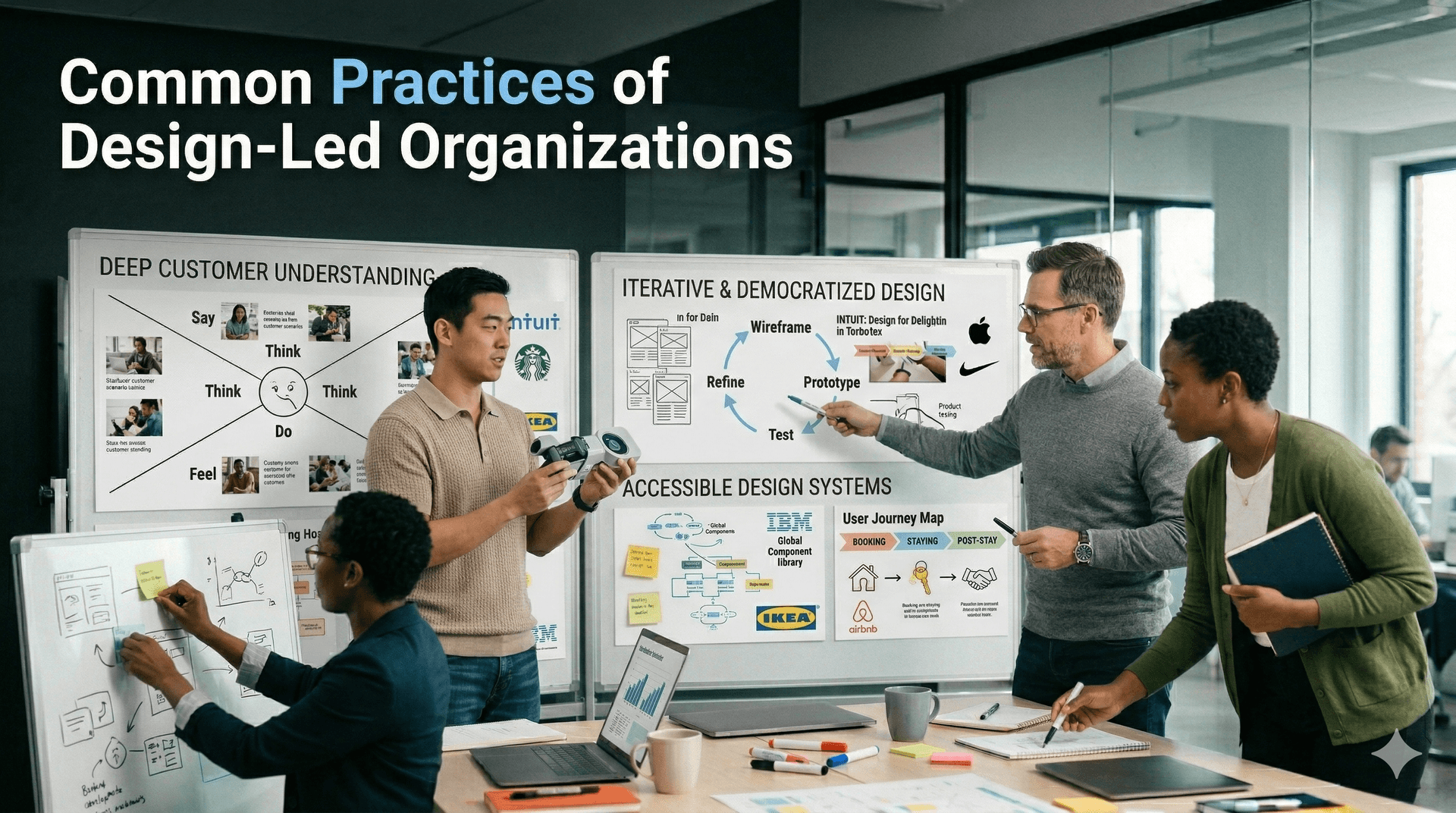
Common Practices of Design-Led Organizations
Across industries, from financial services to consumer goods, companies that apply design thinking share several characteristics.
They Make the Customer Visible
Customer insights are embedded into decision-making processes through journey maps, personas, and experience metrics.
They Empower Designers
Design is treated as a strategic capability rather than a final step in product development. Design leaders often participate directly in executive decision-making.
They Treat Experiences as Systems
Service design encourages organizations to look beyond individual products and instead design the entire ecosystem that delivers value to customers.
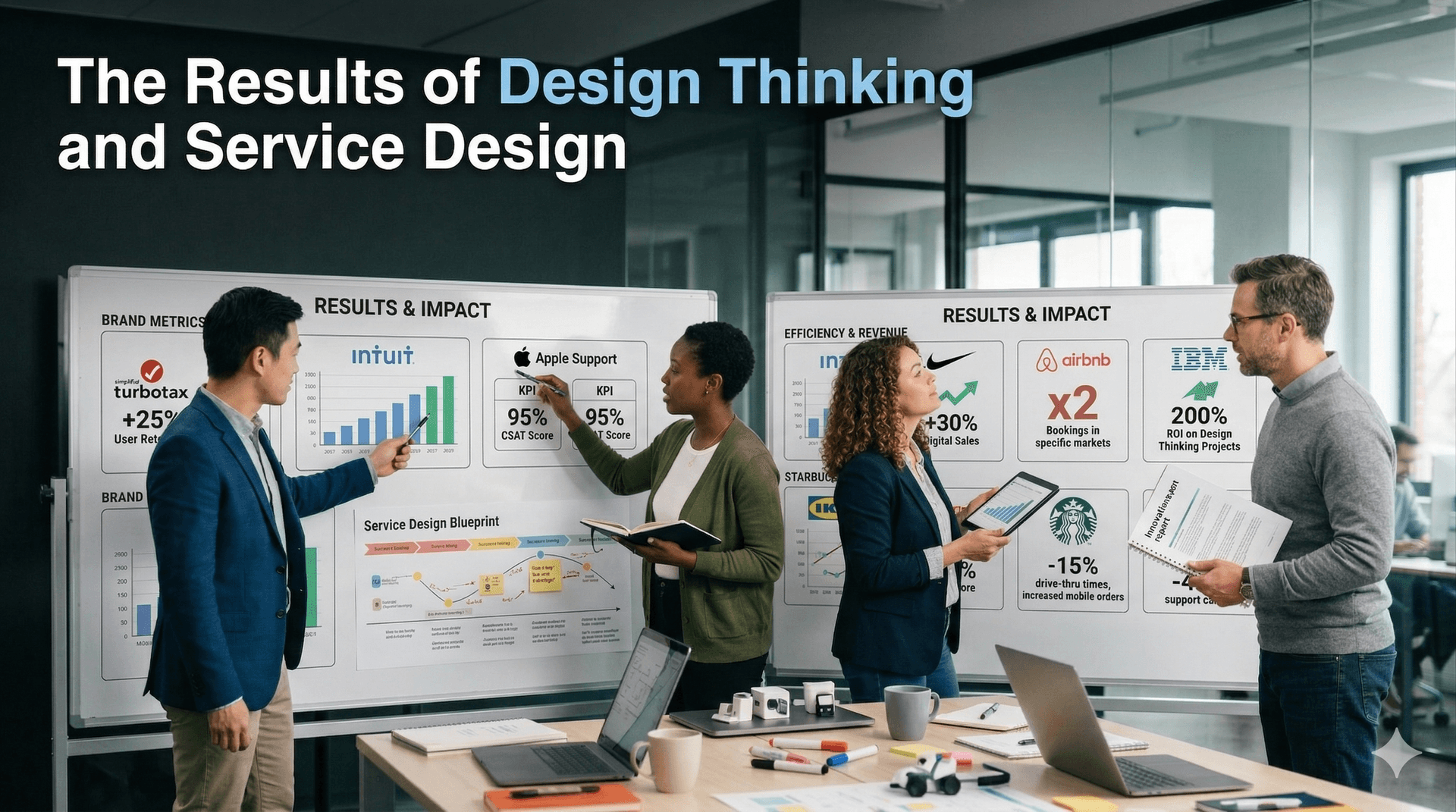
The Results of Design Thinking and Service Design
Organizations that consistently apply these approaches achieve several measurable benefits.
1. Better Products and Services
Human-centred design leads to solutions that are easier to use, more intuitive, and more relevant. This often results in stronger adoption and customer satisfaction.
2. Stronger Brand Loyalty
When organizations design experiences around human needs, they create emotional connections with customers. Brands such as Apple and Nike have built global loyalty, in part, through this design-led approach.
3. Faster Innovation Cycles
Rapid prototyping and testing enable organizations to experiment more frequently and learn faster. This reduces the risk of large-scale failures while encouraging creativity.
4. Greater Competitive Differentiation
In many industries, product features can be copied. Experiences are much harder to replicate. Companies that design holistic customer experiences build a durable competitive advantage.
Why This Matters Now
In a world where technology evolves rapidly and customers have endless choices, experience has become the ultimate differentiator.
Products alone are no longer enough.
Organizations must design:
- experiences
- services
- ecosystems
Design thinking and service design provide the frameworks to make this possible.
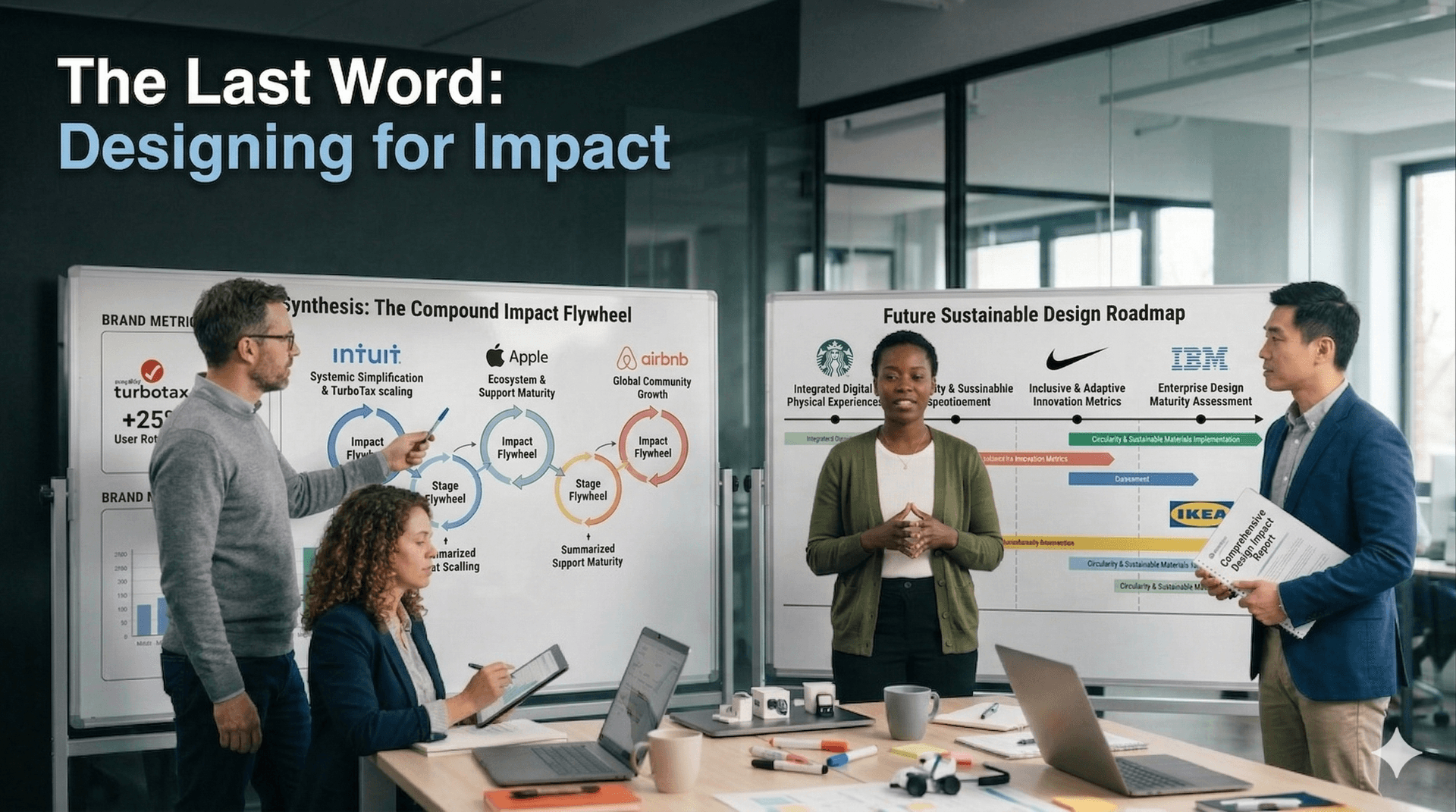
The Last Word: Designing for Impact
The companies shaping the future are not simply building better products. They are designing better experiences.
By understanding human needs, experimenting with new ideas, and continuously improving how value is delivered, design-led organizations transform innovation from a one-time breakthrough into a repeatable capability, and in an increasingly complex world, that capability may be the most powerful advantage an organization can have.
If this thinking resonates, the CoCr8 OS is the framework behind it — available as a live decision tool, a consulting engagement, or a free starting point.
Try the Decision Spark Canvas, explore the CoCr8 Innovation Hub, or start a conversation.