Execution Is a Discipline: Why Learning Organizations Will Define the Next Era of Innovation


Earlier this week, I shared a simple but uncomfortable truth:
“Vision without execution is hallucination.”
— Thomas Edison
It’s a quote we’ve all heard before, but in today’s environment, it carries a different weight.
Because the gap between vision and execution isn’t just a leadership problem anymore.
It’s a system problem.
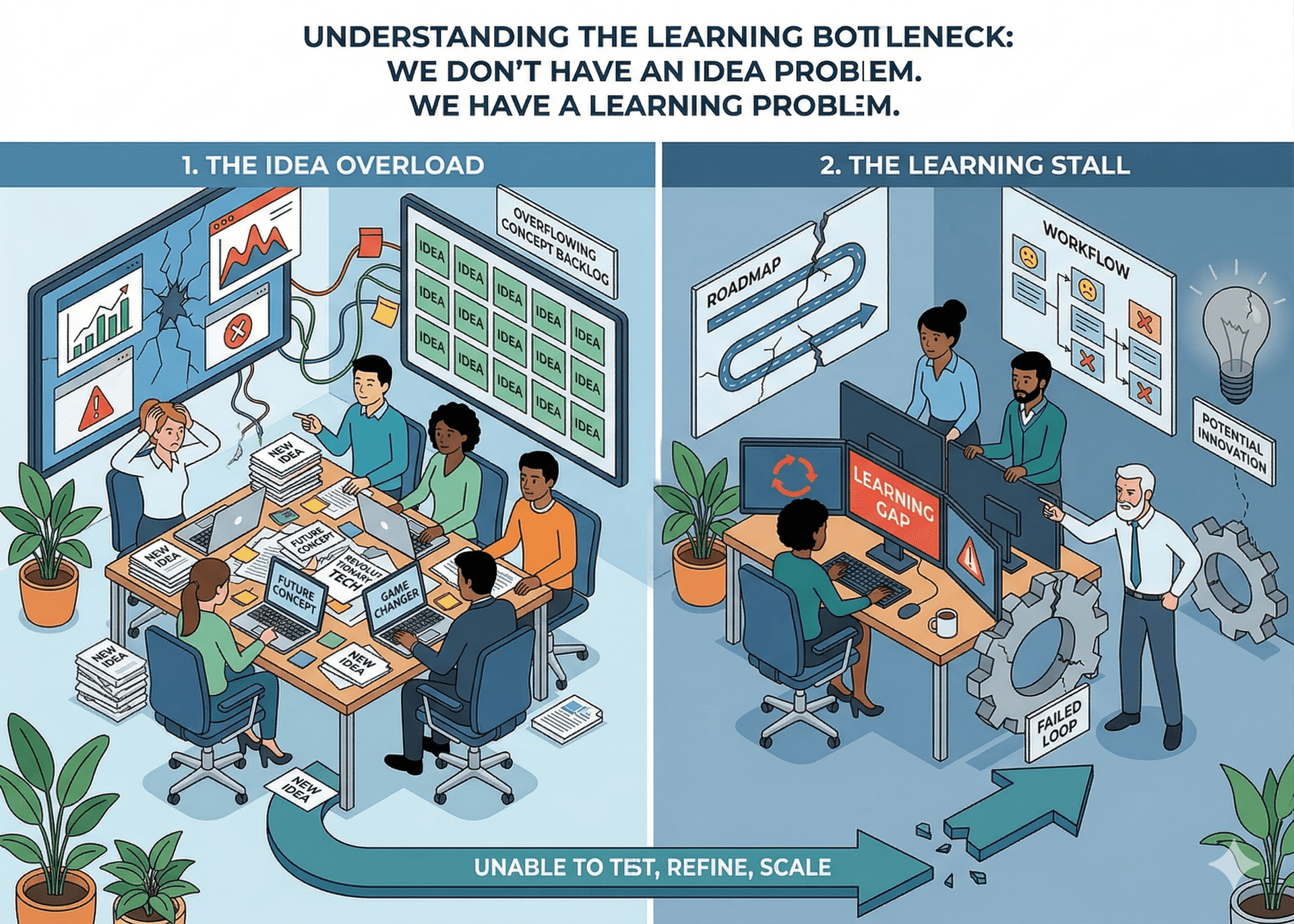
We Don’t Have an Idea Problem. We Have a Learning Problem.
Organizations today are surrounded by intelligence.
Market data.
Customer insights.
AI-driven recommendations.
Trend reports.
Yet despite all of this, many still struggle to move forward. Not because they lack ideas, but because they lack the ability to learn fast enough to act with confidence.
Execution doesn’t fail at the moment of action.
It fails earlier, at the point where organizations hesitate, overanalyze, or disconnect thinking from doing.
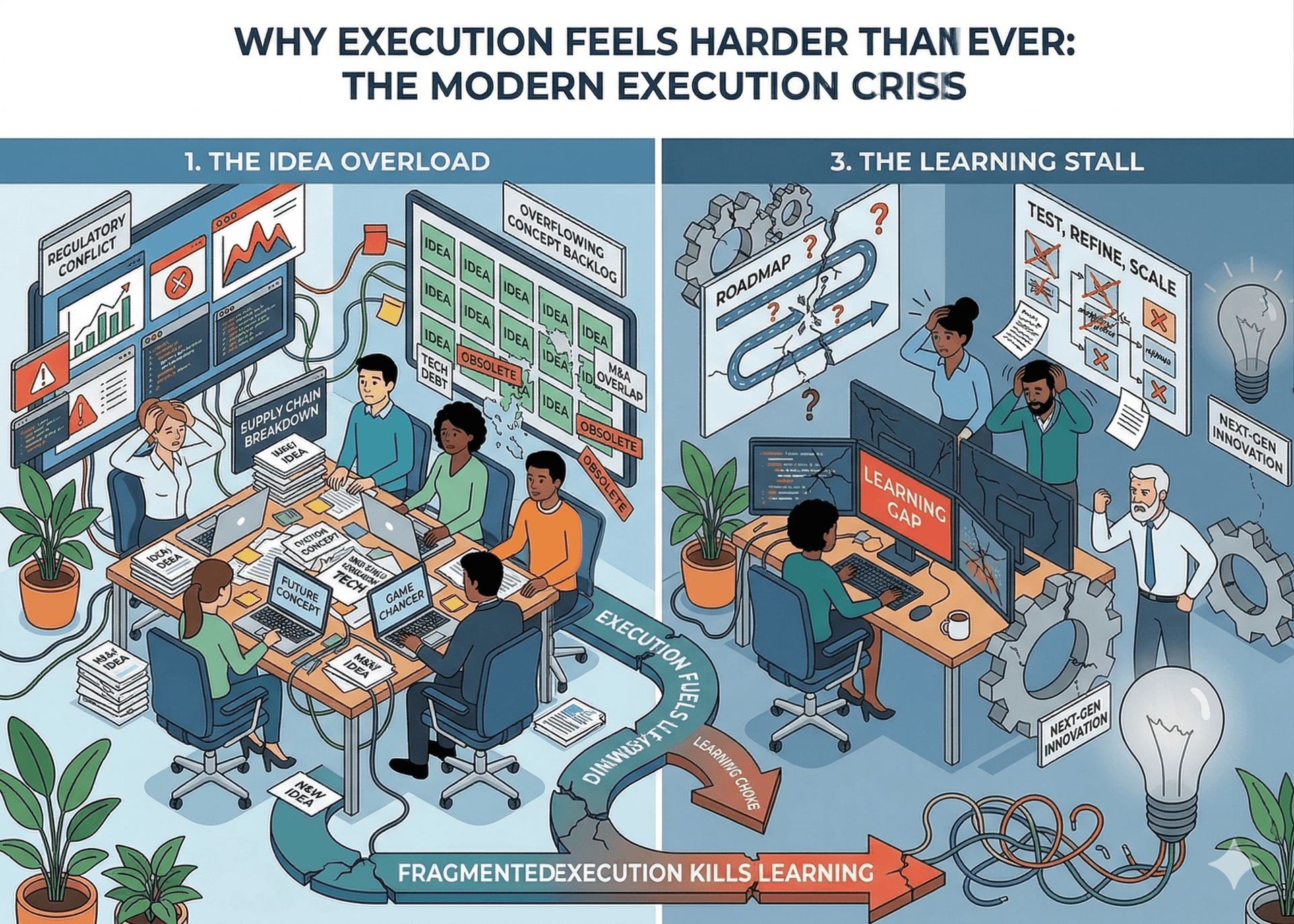
Why Execution Feels Harder Than Ever
In previous decades, execution was often linear.
Define the problem.
Build the solution.
Scale the result.
Today, that model no longer holds.
We operate in environments that are:
- dynamic, not stable
- interconnected, not isolated
- ambiguous, not predictable
Which means execution is no longer about following a plan. It’s about navigating uncertainty, and that requires a different capability altogether:
Structured learning.
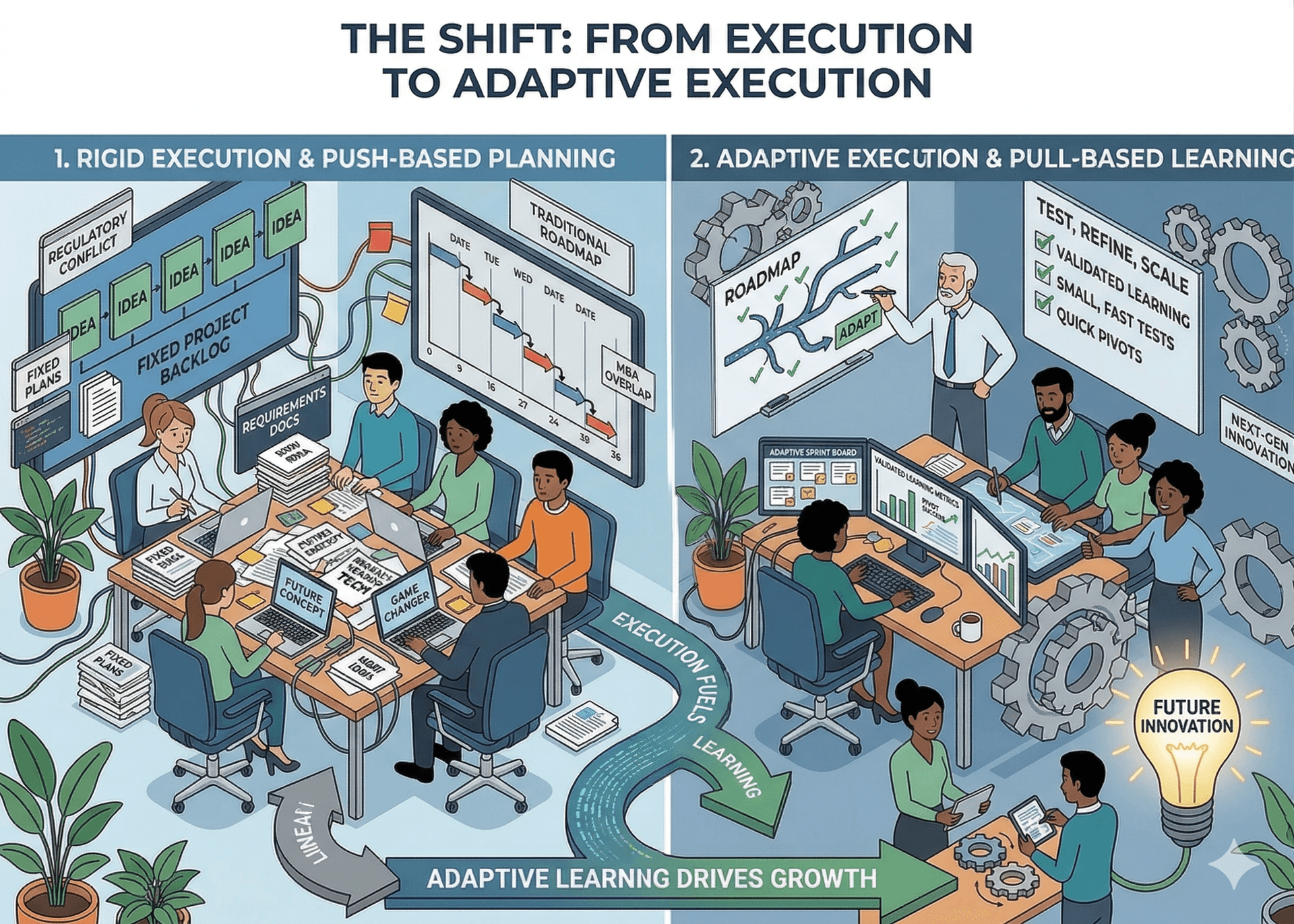
The Shift: From Execution to Adaptive Execution
Execution used to mean discipline. Today, it means adaptability.
The organizations that move forward are not the ones with perfect plans.
They are the ones that:
- test quickly
- interpret feedback
- adjust direction
- and repeat
They don’t wait to be right. They learn their way forward. This is where many innovation efforts break down.
They are designed for certainty…in a world that requires continuous recalibration.
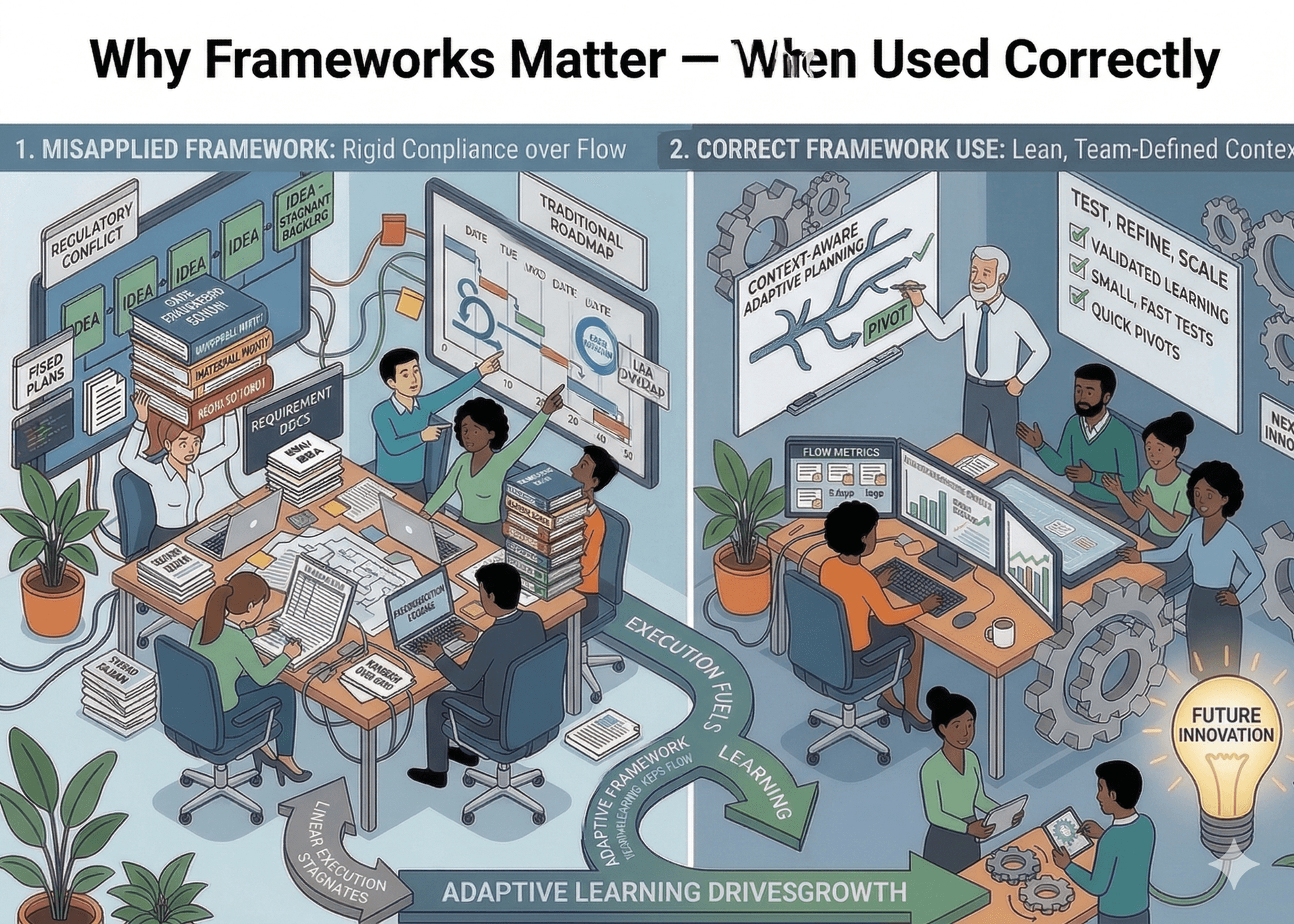
Why Frameworks Matter — When Used Correctly
This is where frameworks like the CoCr8 Labs approach become valuable. Not as rigid processes, but as thinking systems that guide action.
At its core, the three engines are not about theory.
They are about enabling movement:
- First Principles brings clarity to what actually matters
- Futures Thinking expands awareness of what could change
- Design Thinking ensures ideas can be tested and adopted
But here’s the key:
Their real value isn’t in understanding them.
It’s in using them together, continuously.
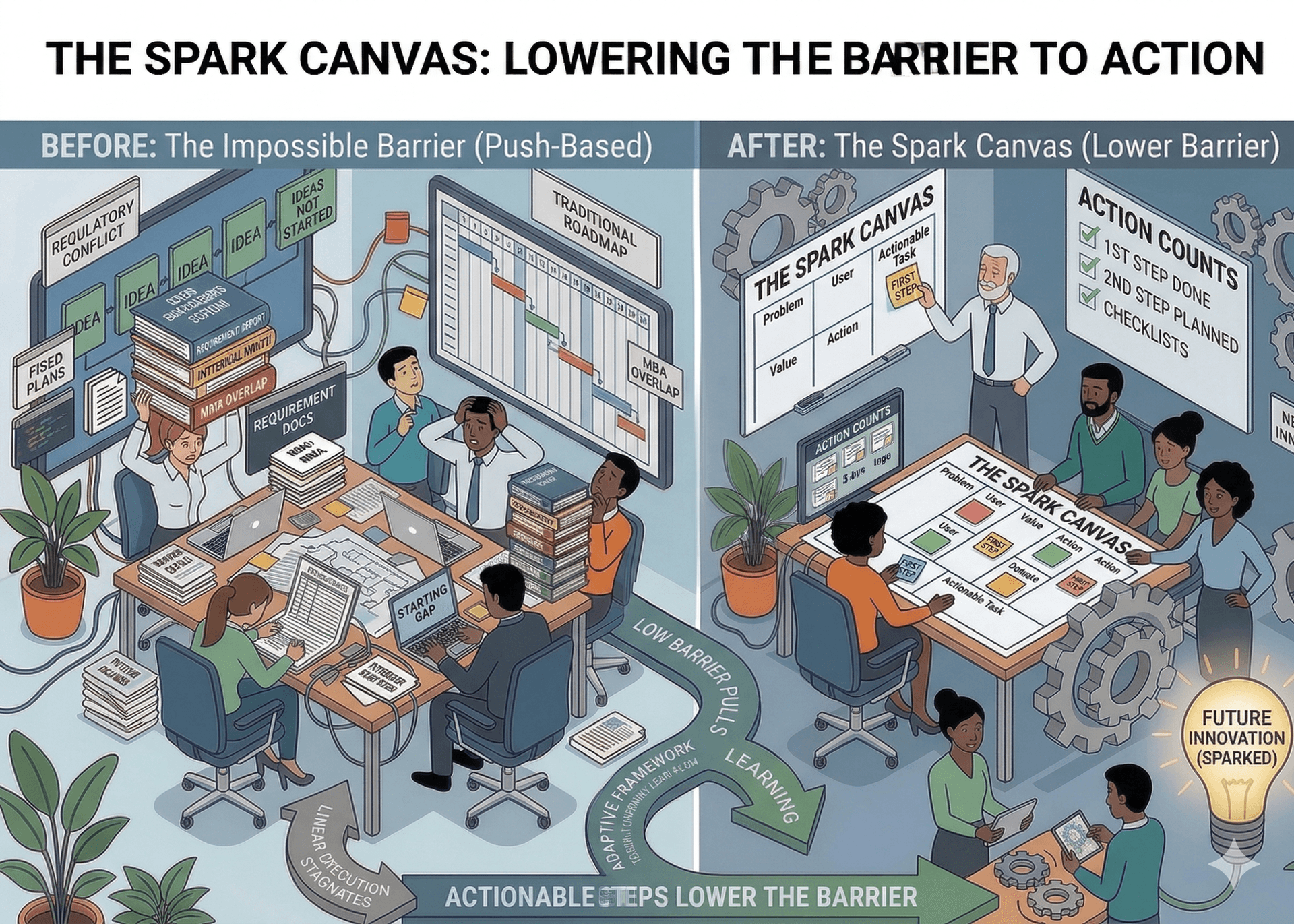
The Spark Canvas: Lowering the Barrier to Action
One of the biggest barriers to execution is complexity.
Too many frameworks.
Too many steps.
Too much thinking before doing.
That’s why we introduced the CoCr8 Spark Canvas this week. Not as a comprehensive model, but as a starting point.
A way to:
- simplify thinking
- connect ideas quickly
- and move into action without over-engineering the process
Because innovation doesn’t need to start perfectly.
It needs to start intentionally.
Becoming a Learning Organization
If there is one capability that will define high-performing organizations moving forward, it’s this:
The ability to learn faster than the environment changes.
Learning organizations:
- treat strategy as evolving, not fixed
- see execution as experimentation
- capture insights systematically
- and apply those insights across the business
They don’t separate thinking and doing.
They integrate them.
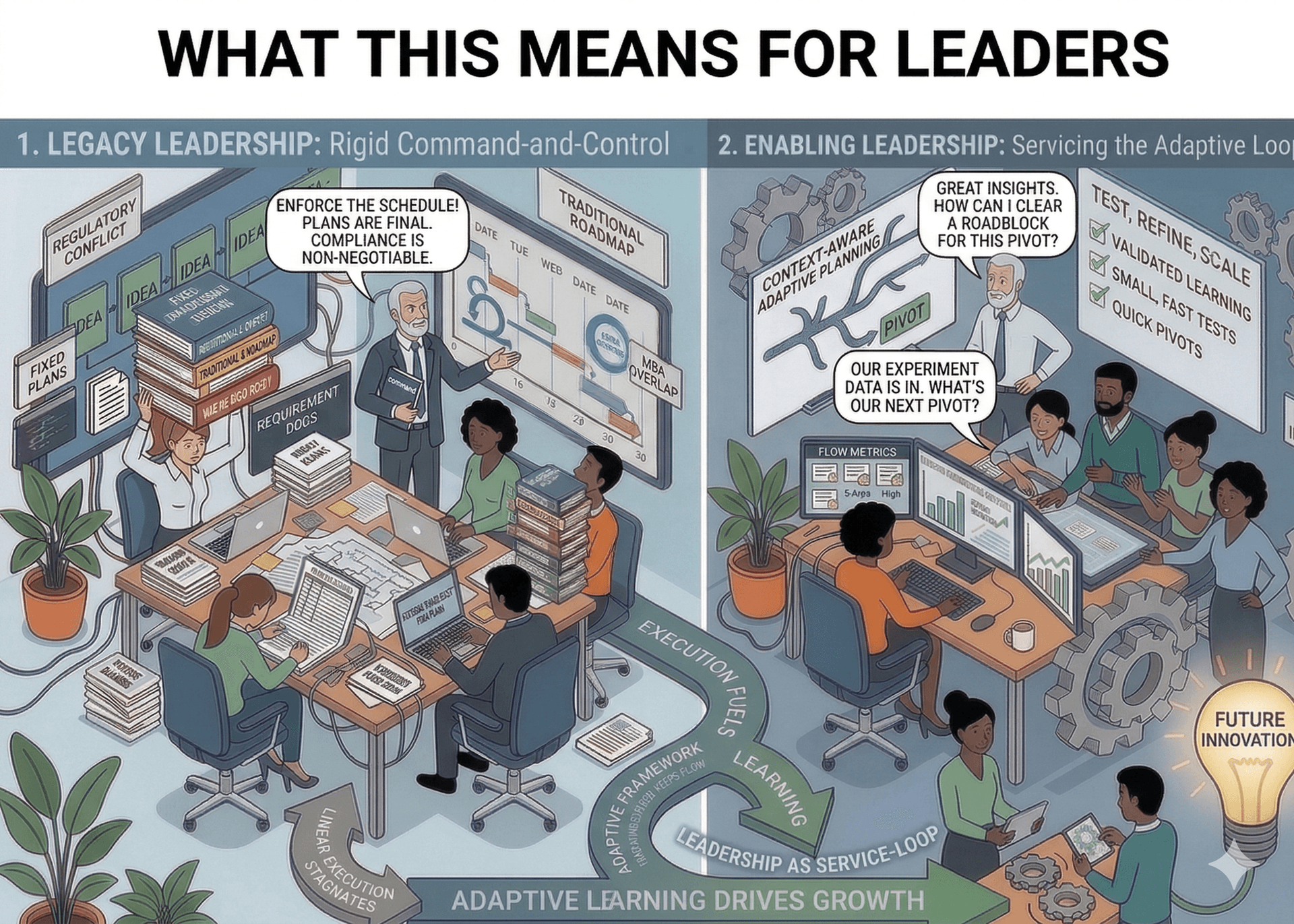
What This Means for Leaders
This shift requires leaders to rethink their role, not as decision-makers alone, but as system designers of learning and execution.
The question is no longer:
“Do we have the right strategy?”
It becomes:
“Do we have the capability to adapt our strategy continuously?”
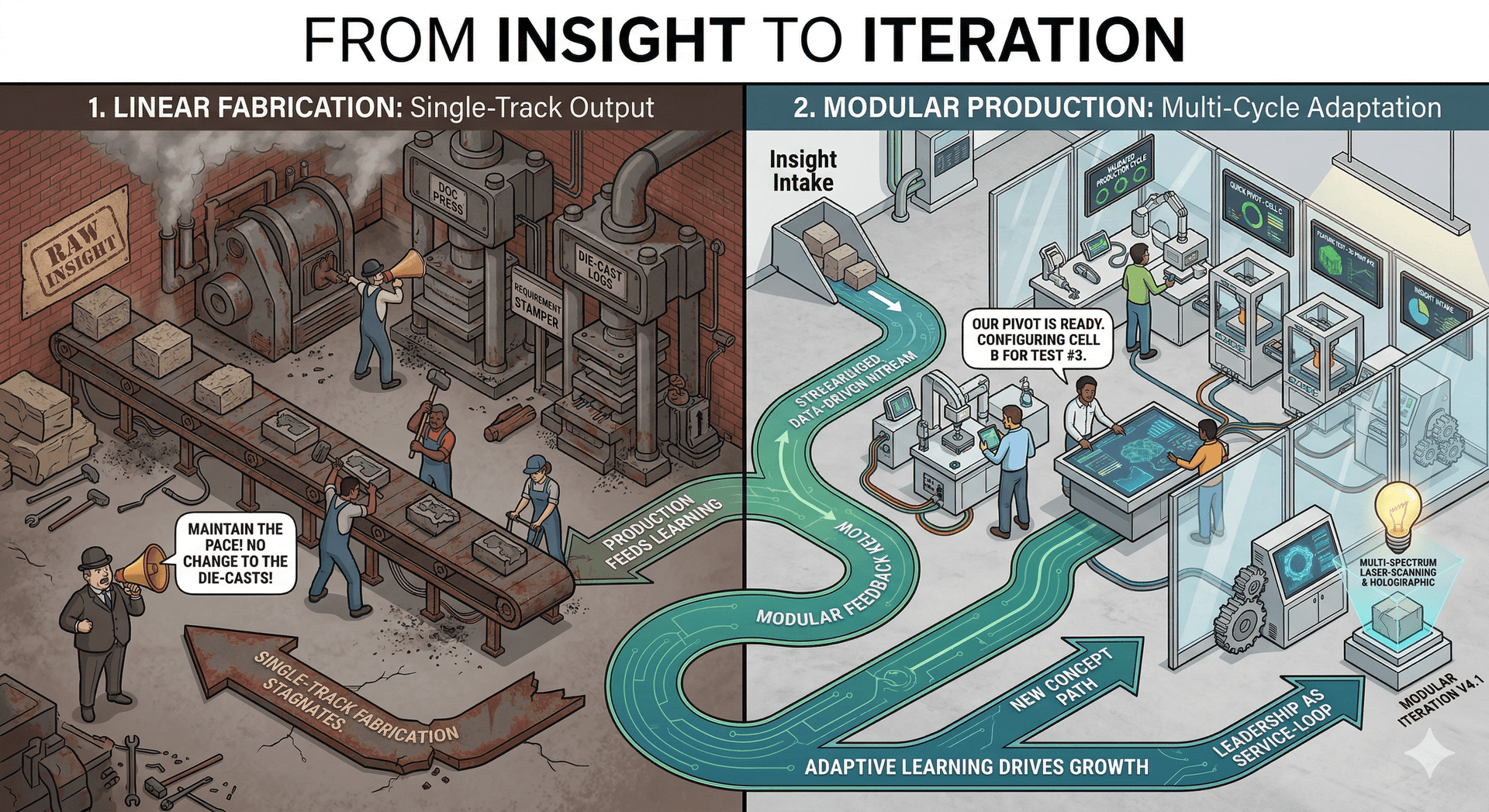
From Insight to Iteration
Execution is often seen as the final step.
In reality, it is the continuous process that connects everything.
Vision without execution may be hallucination, but execution without learning is repetition. The organizations that will lead the next era won’t just execute better.
They will learn faster, adapt more quickly, and build systems that consistently turn insight into action.
Because in the end, innovation isn’t about being right.
It’s about becoming better, continuously.
If this thinking resonates, the CoCr8 OS is the framework behind it — available as a live decision tool, a consulting engagement, or a free starting point.
Try the Decision Spark Canvas, explore the CoCr8 Innovation Hub, or start a conversation.