From Nostalgia Economy to the Futures Engine


The nostalgia economy is often misunderstood. Many view it as a regression, a longing for the past, or a resistance to change. However, through the lens of the CoCr8 Labs Operating System, nostalgia is not about looking backward. It is about understanding signals that point to the future.
Because nostalgia reveals something deeper:
What persists when everything else changes.
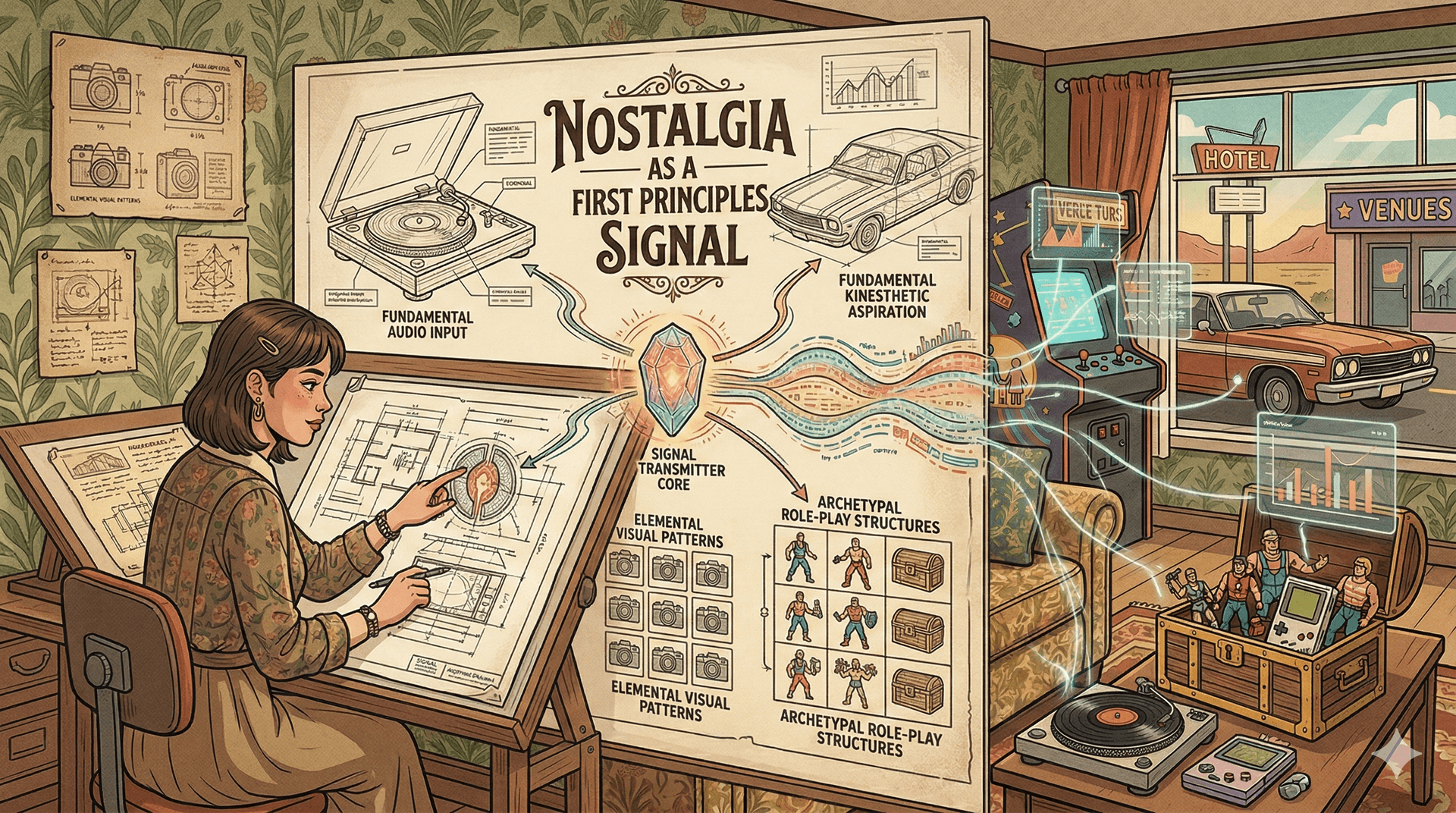
Nostalgia as a First-Principles Signal
In the Truth Engine, we begin by asking:
What must be true?
The revival of analog technology, retro aesthetics, legacy brands, and tactile experiences is not random.
It reflects enduring human needs:
- Simplicity in complexity
- Identity in uncertainty
- Connection in fragmentation
- Meaning in acceleration
Nostalgia surfaces when these needs are unmet by current systems. It is not merely emotional. It is diagnostic. Nostalgia shows us where modern innovation has drifted too far from basic human needs.
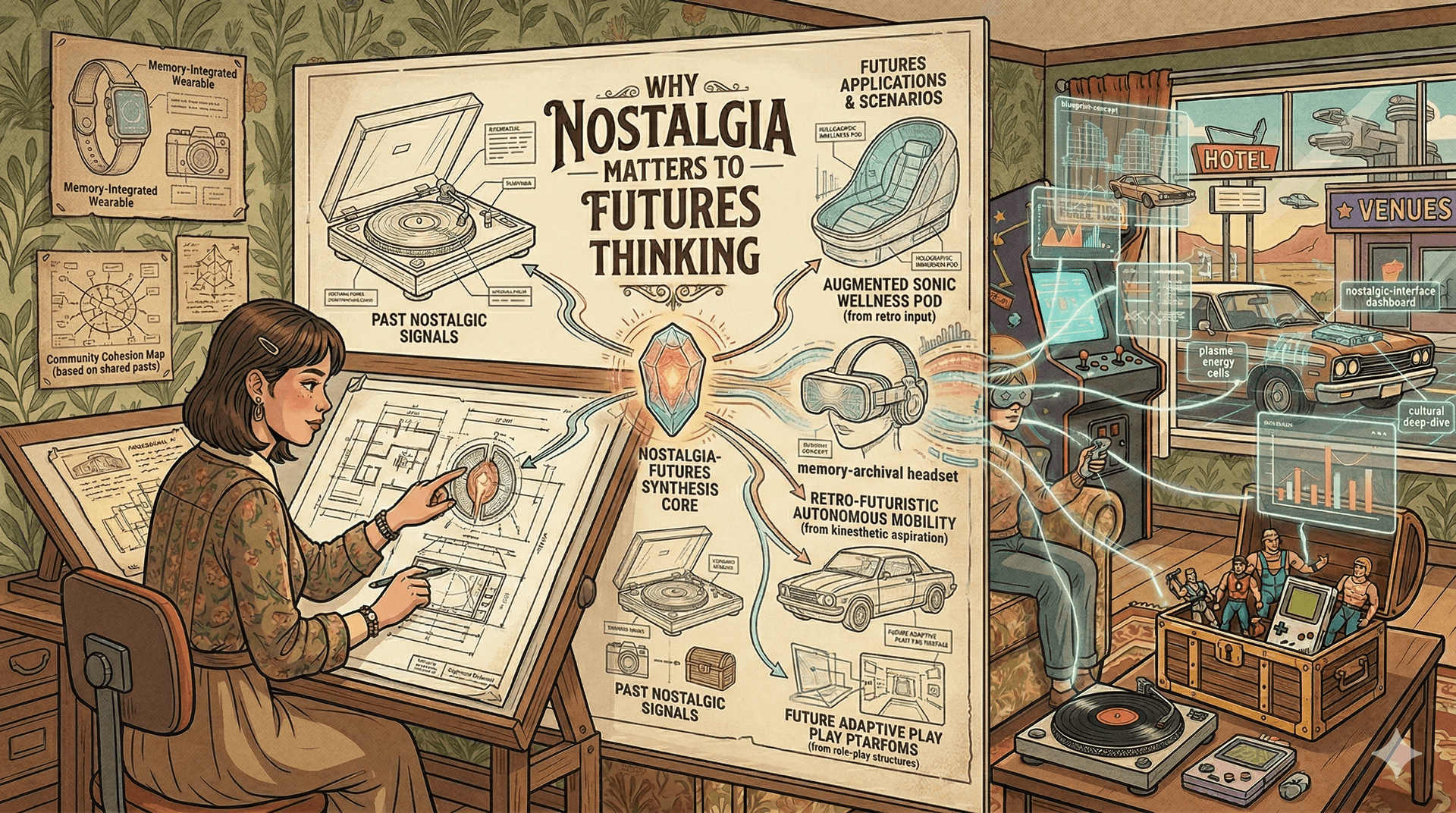
Why Nostalgia Matters to Futures Thinking
The Futures Engine is not about predicting trends. It is about recognizing patterns, and nostalgia represents a powerful pattern:
The faster society accelerates, the stronger the pull toward grounding. This fluctuation is not a contradiction. It is a balance.
As AI advances and digital ecosystems expand, consumers seek:
- tactile experiences
- familiar narratives
- slower interactions
- trusted cultural anchors
These are not temporary counter-trends. They are stabilizing forces within complex systems. Leaders who dismiss nostalgia as “retro marketing” miss its strategic significance. Nostalgia is a futures signal.
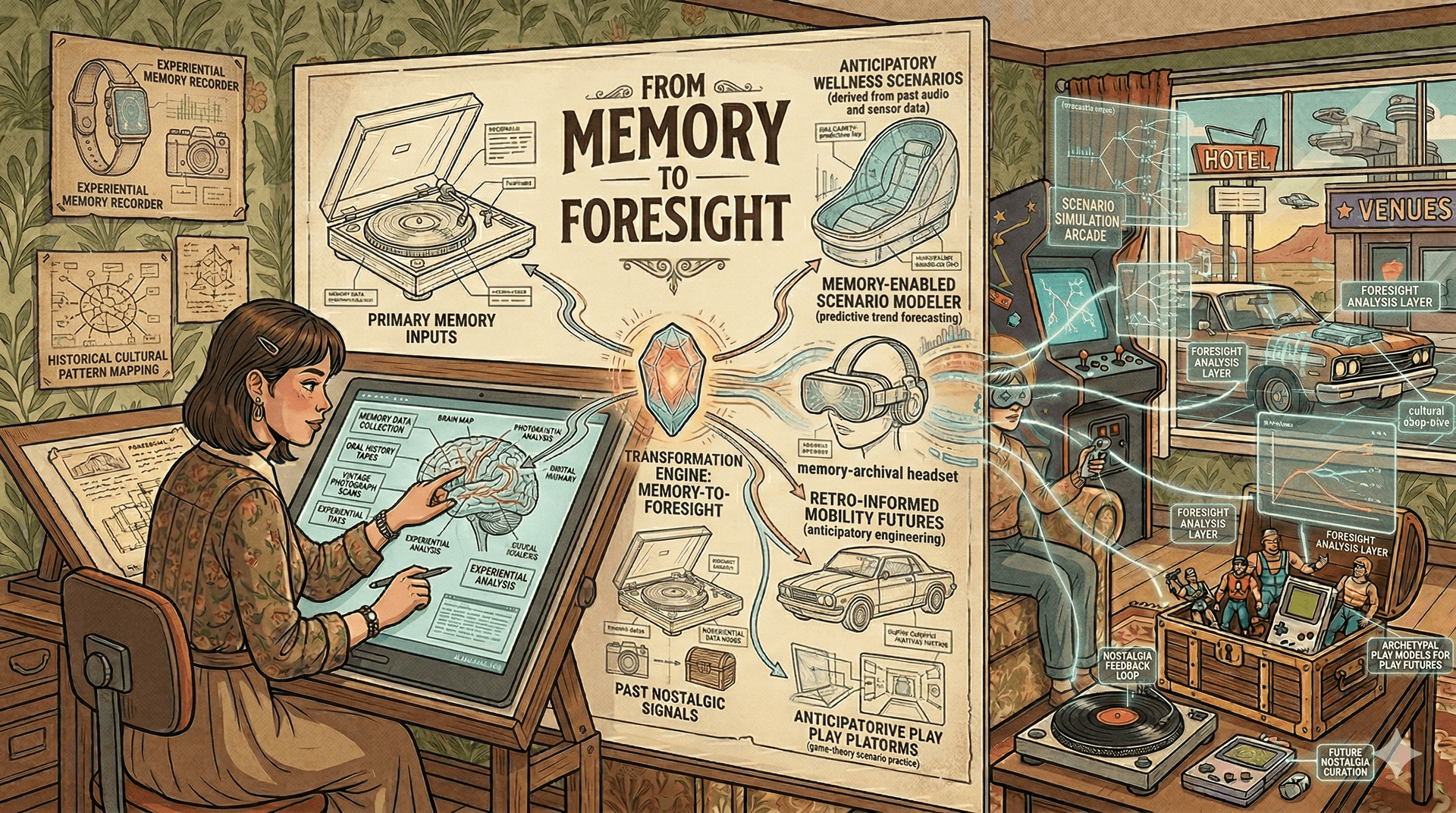
From Memory to Foresight
In the Futures Engine framework, signals evolve through three stages:
Memory Signals - cultural behaviours rooted in past experiences
Pattern Recognition - recurring adoption across generations or markets
Strategic Direction - identifying where these patterns will shape future demand
Nostalgia sits at the intersection of all three. It transforms personal memory into collective movement, and collective movement into market evolution.
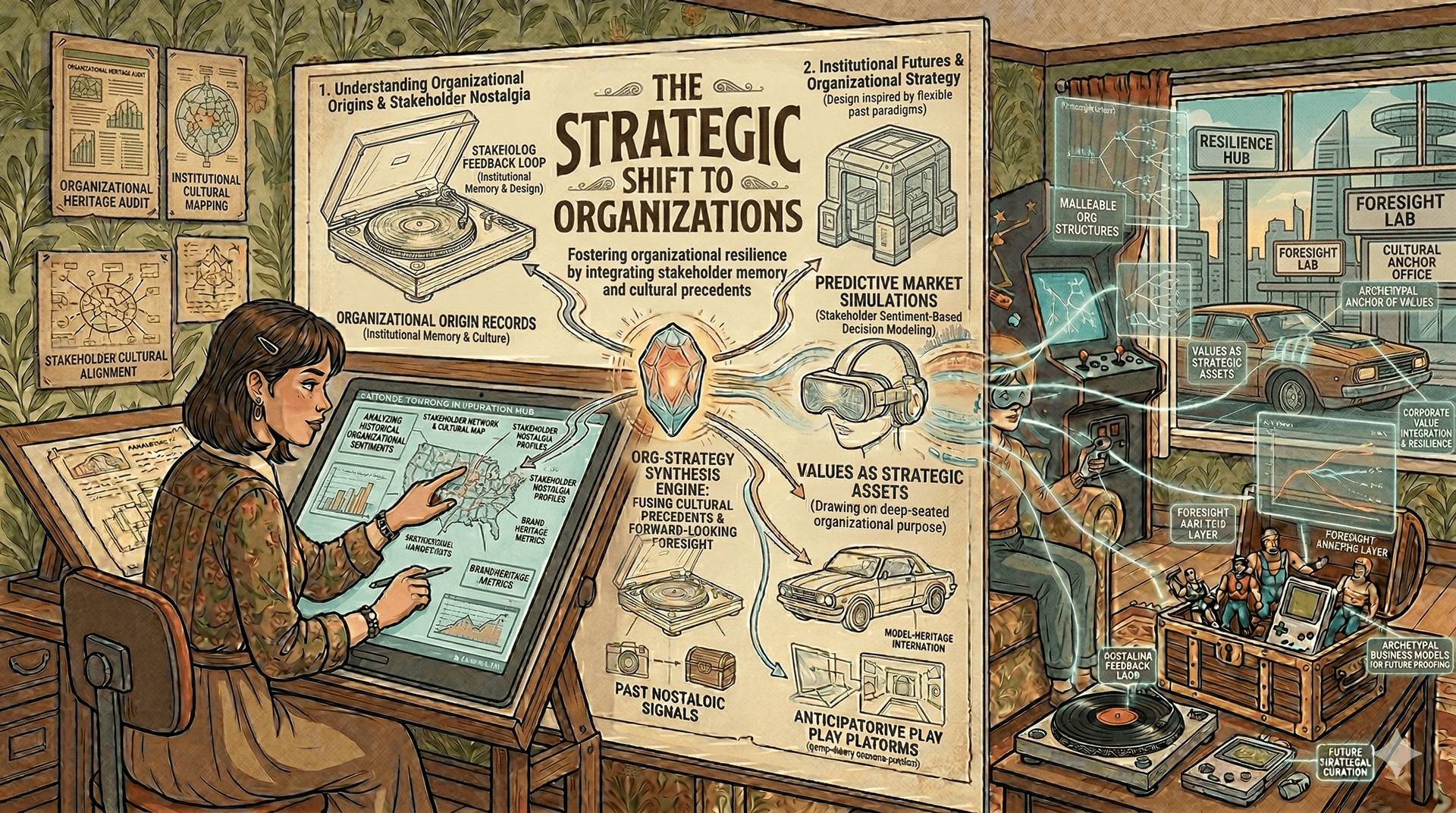
The Strategic Shift for Organizations
Organizations operating through traditional innovation lenses often chase novelty; novelty alone does not sustain value. The nostalgia economy teaches a different lesson:
Future relevance often emerges from reinterpretation, not reinvention.
Successful organizations are learning to:
- blend analog and digital experiences
- revive legacy IP with a modern context
- design products that feel timeless rather than disposable
- create ecosystems where familiarity meets progress
This is not looking backward. It is designing forward with historical intelligence.
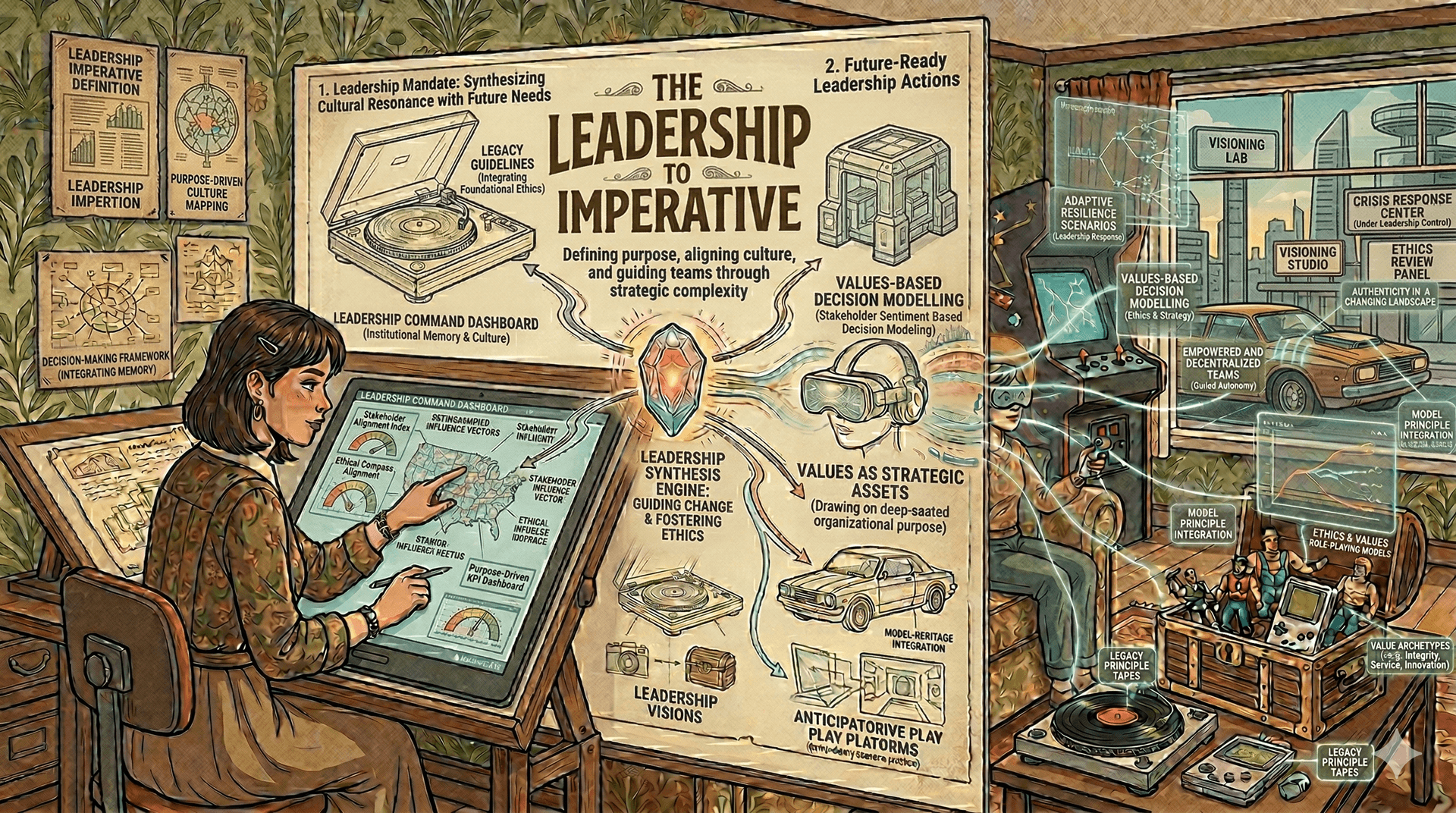
The Leadership Imperative
The Futures Engine requires leaders to see beyond surface trends.
To ask:
- Why now?
- Why is this behaviour returning?
- What human need does it reveal?
Nostalgia becomes a strategic lens that exposes deeper shifts in how people seek identity, belonging, and meaning in rapidly changing environments. When leaders interpret nostalgia correctly, it stops being a marketing tactic. It becomes foresight.
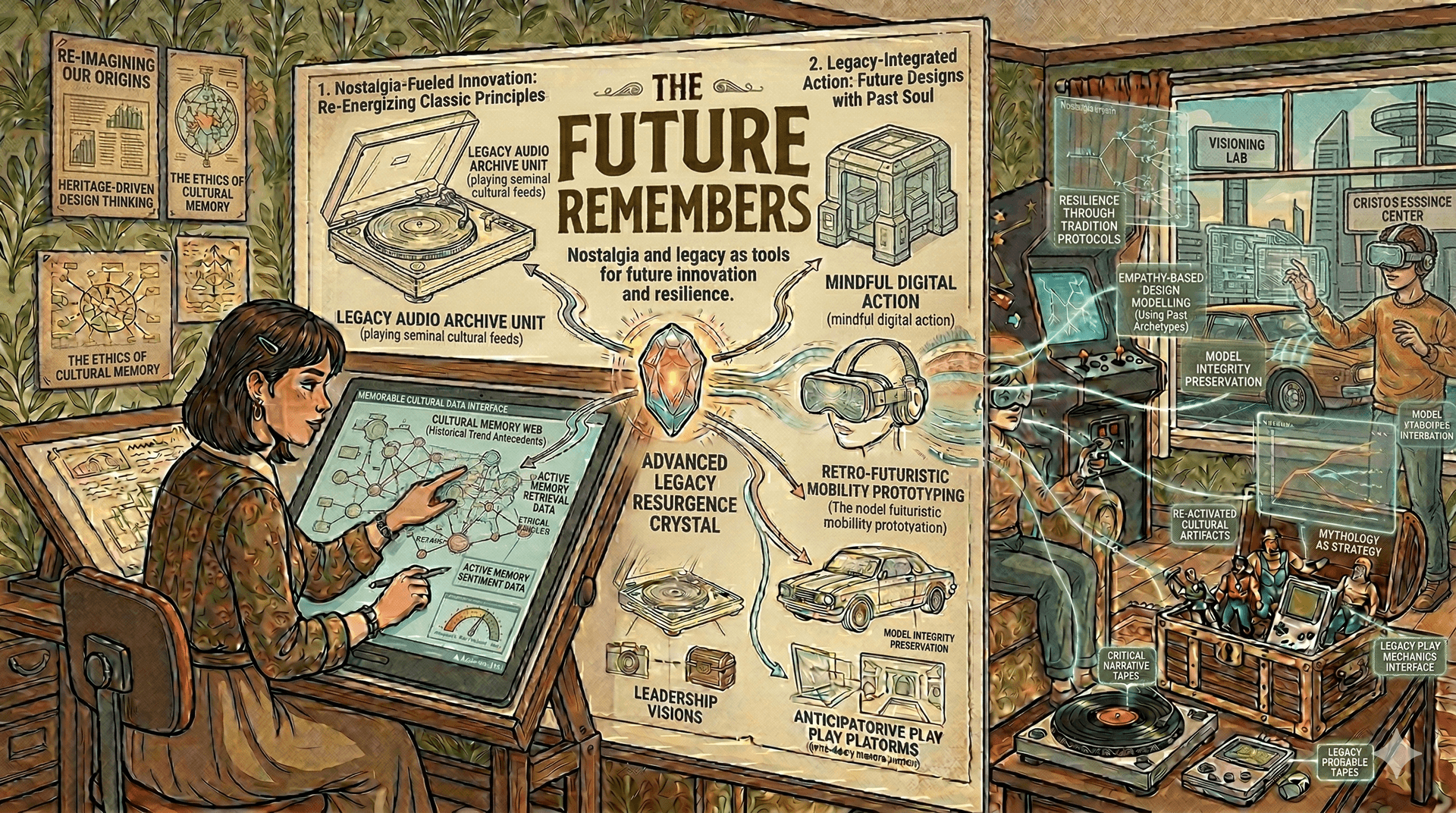
The Future Remembers
The nostalgia economy reminds us of a paradox:
The future is not built only from invention. It is built from memory reimagined.
Through the Truth Engine, we uncover foundational human truths. Through the Futures Engine, we transform those truths into direction. Nostalgia sits between them, a bridge connecting what has always mattered with what comes next. Because progress is not always about moving away from the past. Sometimes it is about understanding which parts of the past were preparing us for the future all along.
If this thinking resonates, the CoCr8 OS is the framework behind it — available as a live decision tool, a consulting engagement, or a free starting point.
Try the Decision Spark Canvas, explore the CoCr8 Innovation Hub, or start a conversation.